They’ve gone dark: Afghans who helped the U.S. military, trained as American-style journalists and rode the wave of women heading to higher education are destroying the diplomas, transcripts and résumés that prove how they built civil society in the country that the U.S. has left behind.
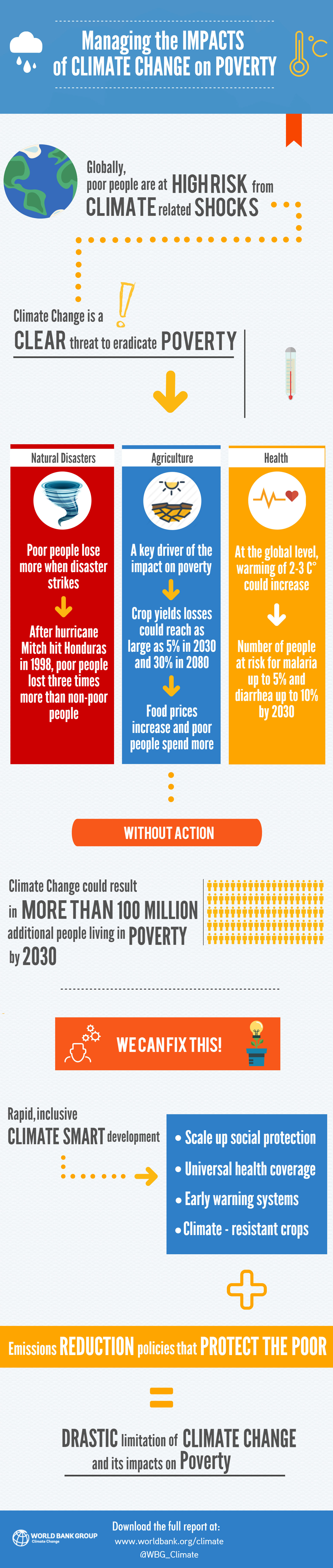
When it comes to the impacts of climate change, the poor suffer more
By Yzabella Sanchez, Newsroom By the Bay
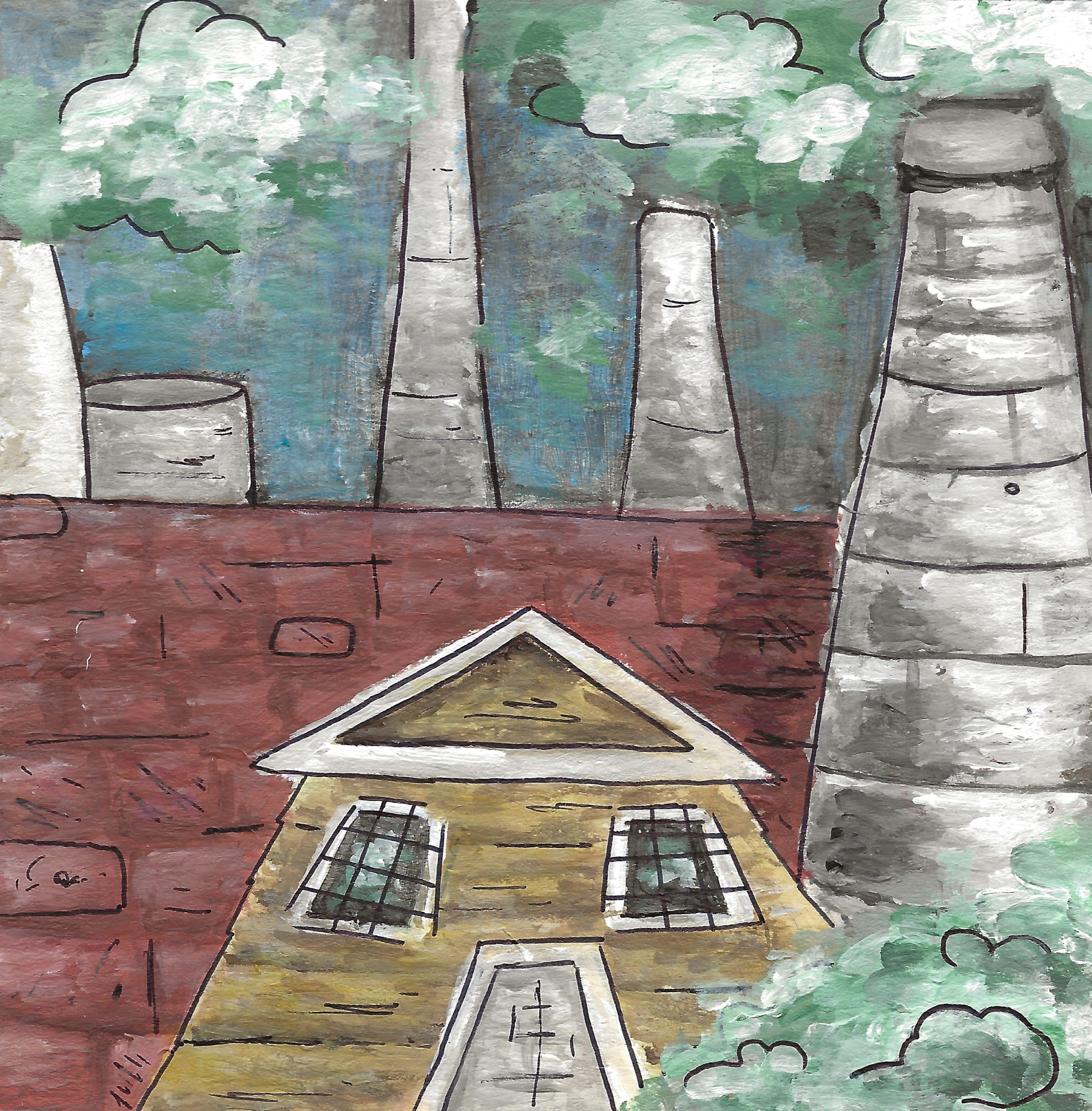
LOS ANGELES — Walking through some neighborhoods in Los Angeles, it’s not hard to gaze at large, Hollywood-style mansions. But head in a little deeper, and there are smaller homes surrounded by the noise of exhaust and engines.
Income is not the only thing that divides these neighborhoods: So does environmental pollution. In the United States, people of color make up the majority of residents living in low-income communities. Further, they are 38% more likely to be exposed to asthma-causing pollutants. According to Make It in LA, an initiative that connects various industries in Los Angeles, 30,000 factories occupy the area.
Activists for racial justice are exploring issues such as climate change for intersections between issues such as poverty and environmental health.
According to Beverly Wright, chief executive officer of the Deep South Center for Environmental Justice at Dillard University in New Orleans, people living in communities of color that are located in heavily industrial areas are subject to higher rates of respiratory or allergic disorders, degraded air quality and increased mortality, when compared to their white counterparts.
“If you’re a person of color, particularly Black or Latino, you’re more likely to live near toxic facilities, like petrochemical companies,” said Wright in an article for Green America entitled “People of Color Are on the Front Lines of the Climate Crisis.” “And then, (our communities) are on the front line of impacts from climate change, living in places where there could be more floods and a higher incidence of different (climate-related) diseases. For poor communities, there’s also not having access to health insurance or medical services.”
Simon Greenhill, a pre-doctoral fellow at the Energy Policy Institute at the University of Chicago, is now in a PhD program at the University of California, Berkeley, where he is conducting climate research. According to Greenhill, lower-income individuals do not contribute as much to the climate crisis since they’re less likely to go on airplanes or travel longer distances in cars. Still, they experience more consequences with fewer resources to combat the situation.
“Wealthier people are more likely to fly, live in a big house that consumes a lot of energy and use more raw materials,” said Greenhill during his July 7 guest speaker presentation at NBTB 2020. “In terms of emissions, a wealthier person in the U.S. has a larger footprint compared to a poorer person in a smaller apartment without a car, (who) doesn’t fly coast-to-coast or go on international vacations.”
No matter one’s occupation or background, Americans of all walks of life encounter the repercussions of climate change. Xavier Wright, 43, a member of the Navy who is from Missouri, described several climate disasters that have struck his home.
While Wright makes a steady living, he can relate to those who are poor and don’t have the resources he does.
“I know what it’s like to lose everything and have to start over,” said Wright, who now lives in San Diego. “One night, I woke up to a flood and we lost our house. Previous to that, I had also lost another home due to a fire.”
While it may appear that only large cities like Los Angeles are vulnerable to the effects of climate change, Wright points out that small towns are not exempt.
“Even while living in a town of only 300 people, the low-income side of town in the flood zone was greatly destroyed by (Hurricane) Katrina,” he said.
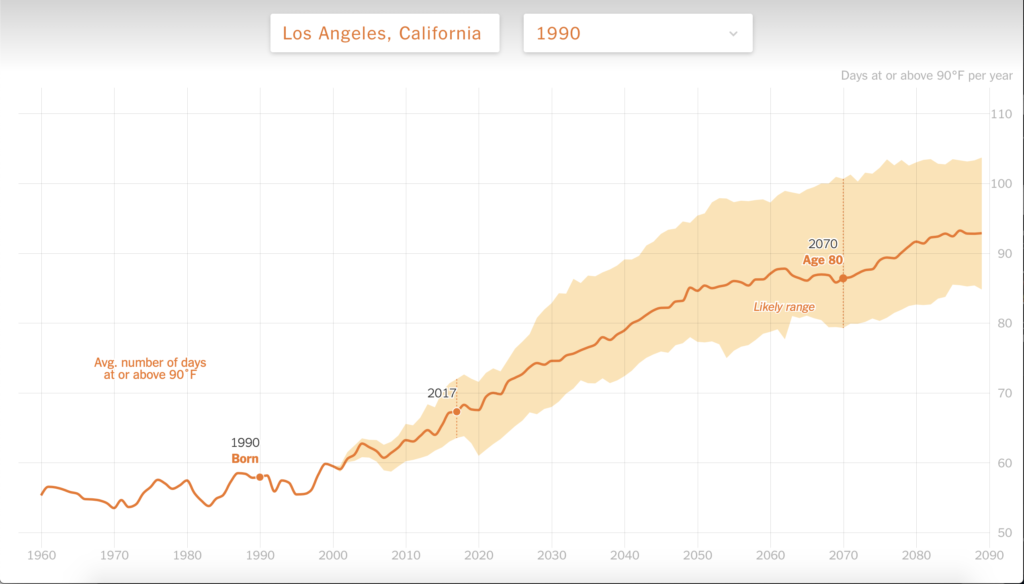
In 2004, a year in which many Gen Z teens were born, Los Angeles had only 63 days a year of 90-degree temperatures. Today, Los Angeles can expect such 67 days a year, but by the time those Gen Z teens are 80, there could be 93 days with high temperatures. If we continue to emit at high rates, these numbers could rise drastically and lead to even hotter days in the near future.
How that will affect people in the path of floods, who don’t have health insurance and can’t jump on a plane to avoid disaster, is anyone’s guess.
—Listen to “The Climate Contrast” at “Recording Race,” a new podcast created by Newsroom by the Bay’s Summer 2020 students under the guidance of team leader Maggie Galloway.

Related Posts