They’ve gone dark: Afghans who helped the U.S. military, trained as American-style journalists and rode the wave of women heading to higher education are destroying the diplomas, transcripts and résumés that prove how they built civil society in the country that the U.S. has left behind.
Special report: What learning looks like
Lost and confused, yet resilient and open to change, students describe how coronavirus has changed their lives
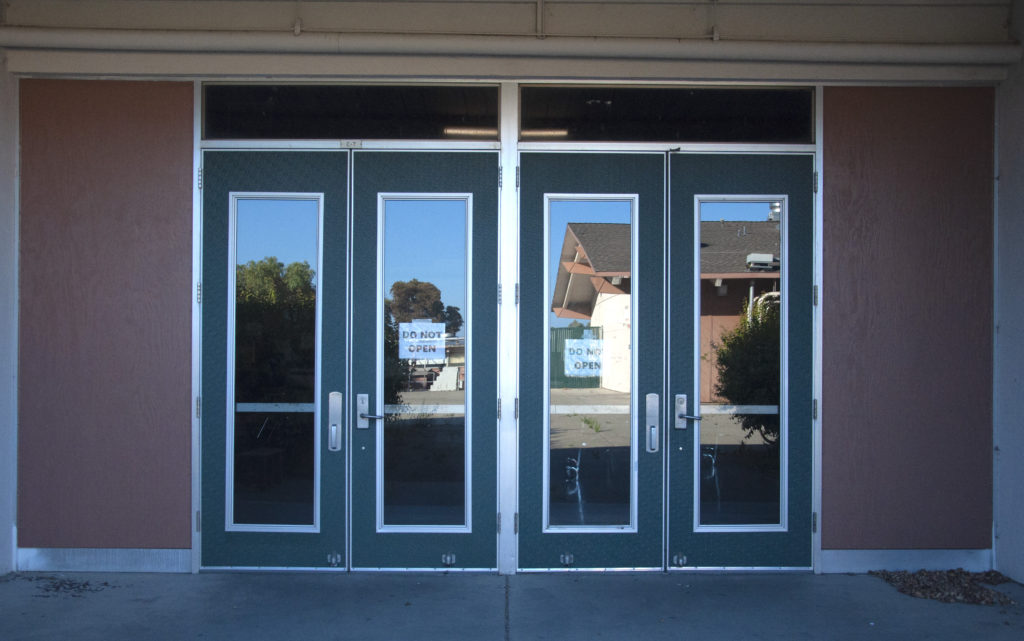
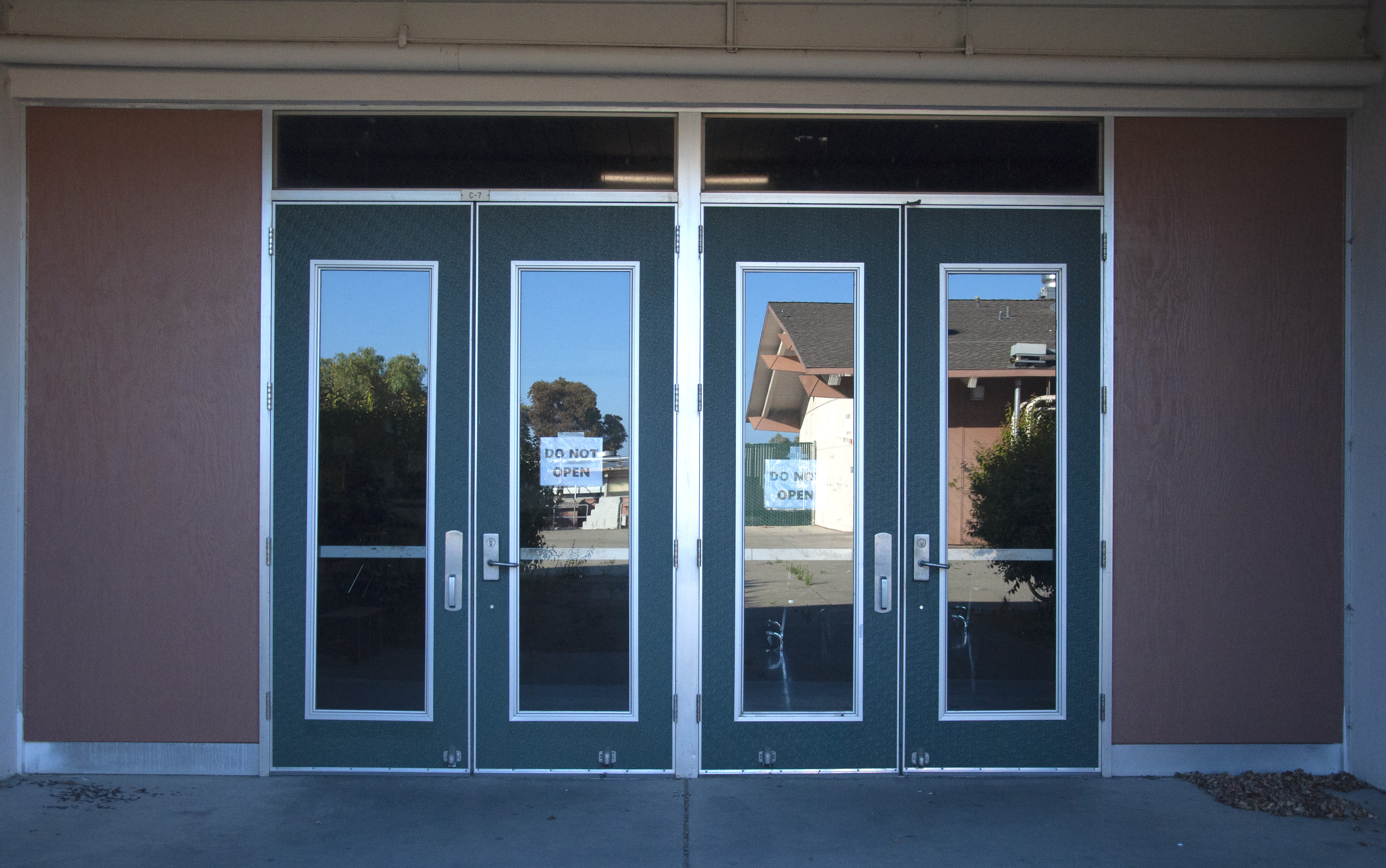
The doors to a cafeteria at Mission San Jose High School in Fremont, California, are locked on Tuesday, July 7, with a sign prohibiting people from entering. Normally, this cafeteria would be open for students to use during the lunch break and passing periods. Caption and photo by Mahek Bhora/NBTB.
Editor’s note: Click here for the What Learning Looks Like project.
By Grace Sandman, senior writer
PASADENA, California — Their bedrooms have been transformed into Google classrooms. Their birthday parties are on Zoom. They miss their friends, school, sports and end-of-year traditions. They never got a chance to walk across the stage. They speak of new lives, of endless family time, of wearing face masks as soon as they step outside. After hours and hours of staring at screens, they feel dizzy.
Most of all, they miss human contact.
From Fremont, California to Taipei, Taiwan, from Jakarta, Indonesia to Hong Kong, and from Seoul, South Korea, to Toulouse, France, teens writing stories and taking photos for the “What Learning Looks Like” project are reporting on quarantined lives during the coronavirus.
No matter where in the world they are, it seems, students are doing their best to learn despite the odds.
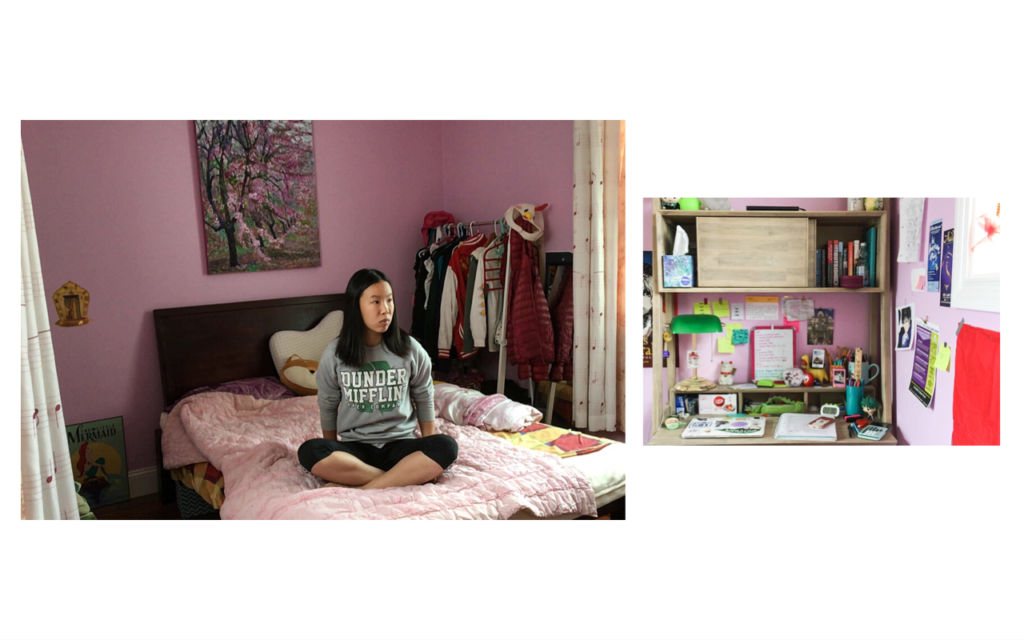
“Learning online, I have often felt unproductive, lost and confused. Every day I wake up, read the news, listen to school lectures and get dizzy from looking at screens,” wrote Audrey Hwang, from Taipei, Taiwan. “I go into the kitchen to make myself a snack or walk the dog — just for a break.”
WLL began in March as a project to document the remote learning lives of teens around the world. High school student reporters across the globe were asked to report and respond to specific questions via Google Form about how and where they are learning right now. Teens were guided to describe what their online or other schooling looks like, including the means and methods of their remote learning, their schedules, their workspaces, their hardware, software, online communication platforms, lessons and curricula.
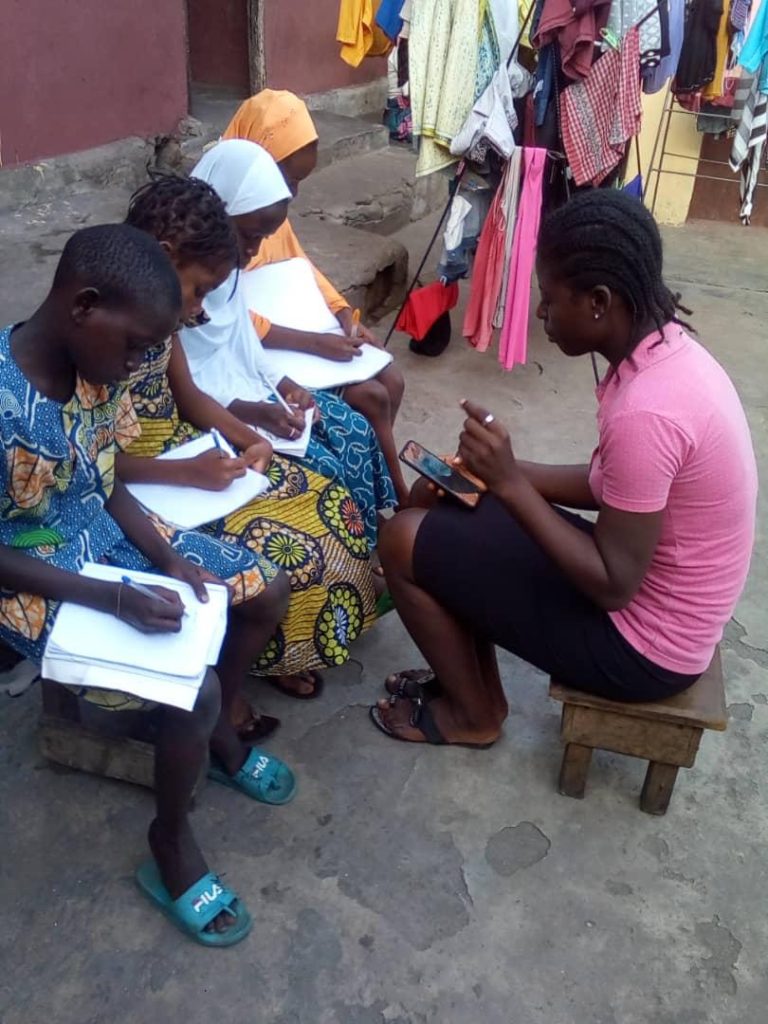
Teacher Shola Shoroyewun (right, in pink shirt) reads to students in Ajegunle, a poor neighorhood in Lagos, Nigeria. Five students share Shoroyewun’s phone to access a mobile app with high school lessons. Photo by Tobi Tiamiyu/used with permission. 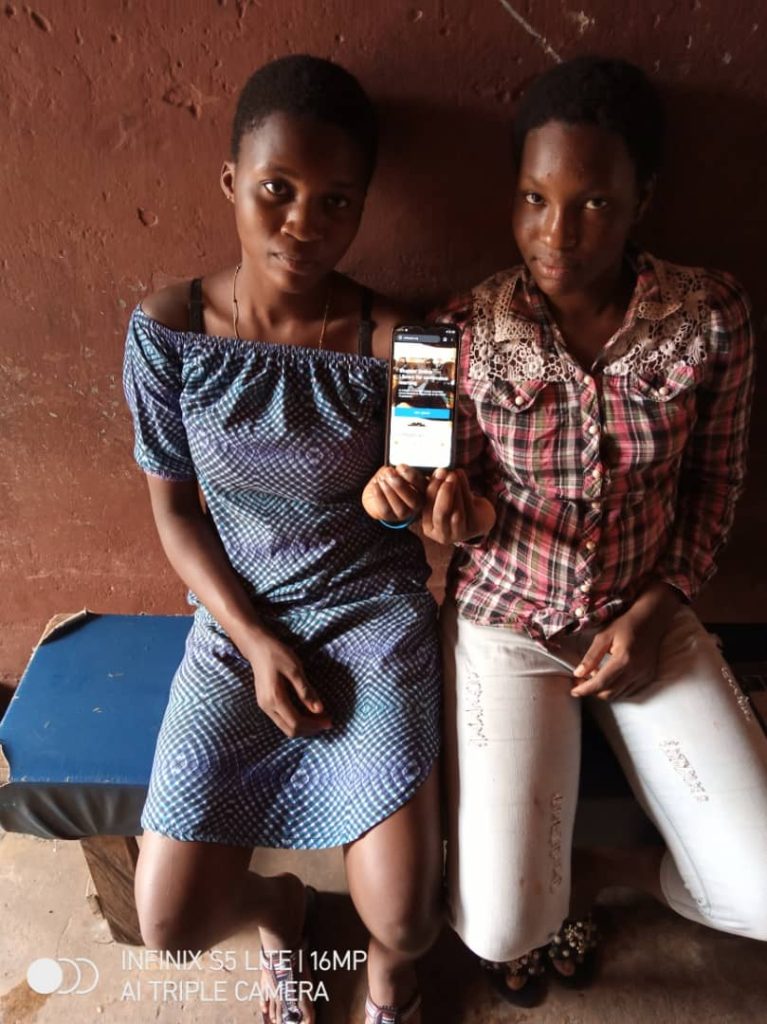
Student Ifeoluwa Martins (left) and a fellow student with the Safleaders app. Launched in mid-April, it includes Nigeria’s high school curriculum, with lessons on biology, civics and agricultural science. Photo by Shola Shoroyewun/used with permission.
So far, more than two dozen stories have been collected, with new submissions arriving every week. Some document continued lockdowns and virtual schooling, while others describe a return to traditional school, sometimes for just a few days or weeks prior to the beginning of summer vacations as a kind of dress rehearsal for the next academic year beginning this fall.
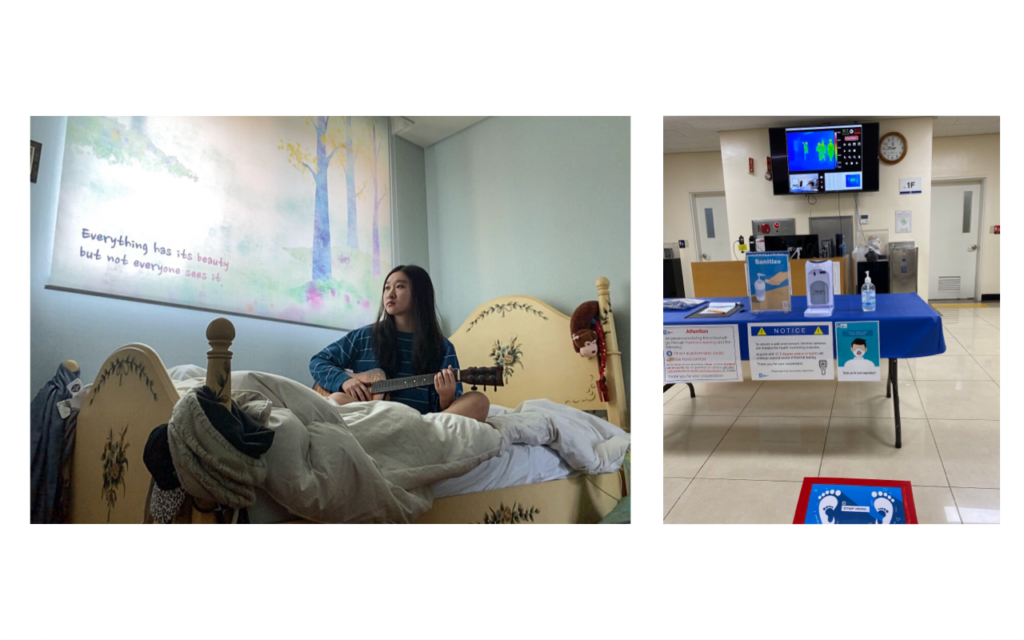
Responses so far suggest that the most significant question is not how or where students are learning during lockdown but who they are becoming now that they have gone from classroom to bedroom. Those answers have ranged from remarkable to wrenching.
Broadcaster-to-be 13-year-old Aliha Ali has taken quarantine as a chance to work on her career.
“I’m spending less time learning and more time watching YouTube videos and Netflix,” wrote Ali, who hosts a children’s news program called “C-News” on the Jinn TV network in Pakistan. She also films videos with her brother for “The Aliha & Aahil Show” on YouTube. Watching and making videos “helps to keep myself busy and creative,” Ali wrote.
Released from research papers that used to keep her up until midnight, student Sydney Si-Xian Lee, 15, worked with her best friend to organize student musicians around the U.S. for an online concert to raise money for DirectRelief, an organization that equips doctors and nurses worldwide with life-saving medical resources.
“I’ve always known that change starts with one step,” said Lee, from Elmhurst, Illinois. “But feeling it firsthand is new.”
Confined to her bedroom in Vancouver, Canada, and feeling overwhelmed by useless trinkets and old photographs, 16-year-old student Chloe Wong found free time more challenging. But in cleaning her room, she went from apathy to sadness and finally acceptance.
“I think that’s what change feels like,” wrote Wong. “ It’s imminent and inevitable. What I felt in my new-looking room reminded me of the way I’ve felt throughout this pandemic. I was lonely and confused. Everything was so new.”
“(C)hange is good,” she added. “And one day, all our rooms will have to be cleaned.”
For high school students, the academic challenges of quarantine are front and center.
While quarantine has made some more motivated to do and study things they feel passionate about — writing novels, taking on new projects and playing musical instruments for pleasure — others report distance learning is particularly hard without the level of in-person help and feedback they had received from teachers in the classroom. Often they struggle, feeling as if they are teaching themselves. Others report distance learning has not been as difficult. Some feel school “broke a long time ago” due to teachers who weren’t engaged or interested in teaching.
Still, students seem to be coping; a few even thrive. Some say they have new free time to have deeper conversations and build connections with parents and family members. They are finding contentment in small pleasures like making coffee, reading novels, exercising and playing video games with friends. Those whose families are not facing financial hardship and don’t have to care for younger siblings while parents work say they’re especially grateful.
Yet statements that “I’m doing just fine” are outweighed by others that admit “I’m getting by like everyone else,” “I’m doing my best” and an acknowledgement that nothing is normal when so many are fighting and dying from COVID-19.
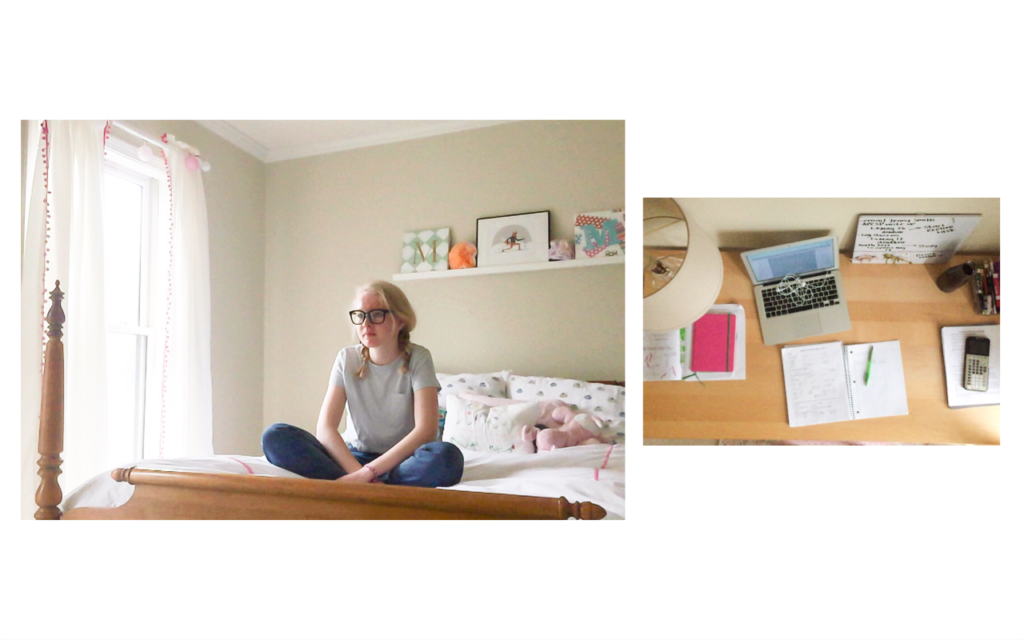
Students balance good days and bad days, highs and lows. Paige Mays of Orinda, California, expressed a sentiment that many share: “It’s hard to ‘seize the day,’ when there is nothing to look forward to.” Asian American students voiced fear about returning to school, worried about face blaming and name calling due to anti-Asian rhetoric surrounding COVID-19. Many are acutely aware that their own decisions and movements could cause them to infect another person. They describe “pit of your stomach guilt” if they ever leave home without a mask.
Perhaps the most amazing theme to emerge from the testimonies of teens all over the world, is the conscious decision each has made to look for the silver linings –– the unexpected and modest blessings in disguise –– of this global pandemic.
“Quarantine has changed the way I think,” Mays said. “But I’ve realized that if I continue to go to bed with anxiety, stress, and sadness, then an unpleasant day will always be my outcome. There are bigger things to worry about, like the health and well-being of my family and friends.
“I’m not a fan of this virus, but at least I can say I’ve been tenacious, adaptable, and open-minded in a world that’s so uncertain.”

Related Posts