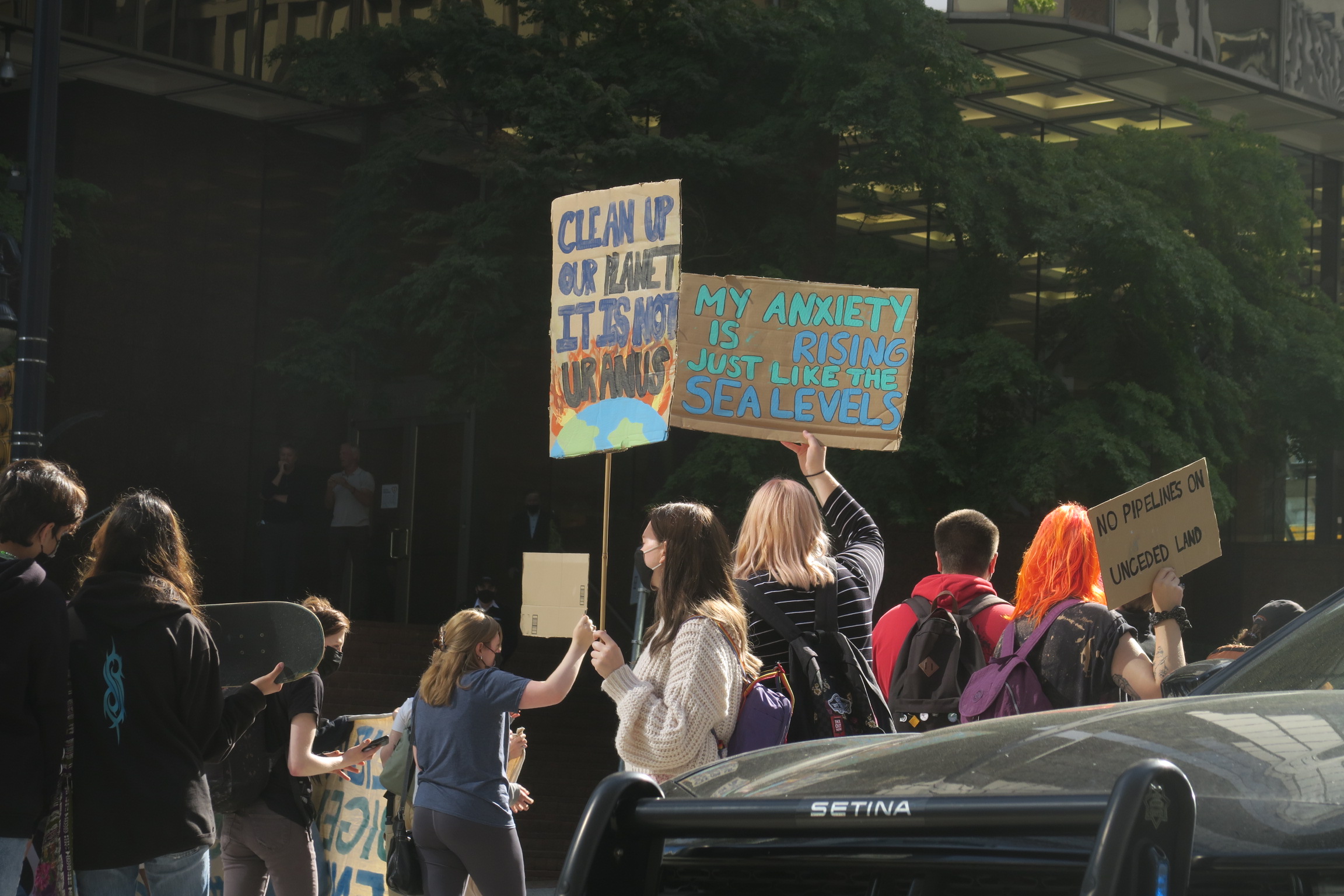
They’re back: Today’s Fridays for Future strike — the first in 18 months — will see youth activists taking to the streets again to push progress on solutions to climate change.
Here’s what you can do to raise awareness and seek solutions where you are.
Tackling mental health in a virtual world
Editor’s note: Click here for the What Learning Looks Like project.
By Charlotte Ehrlich, senior writer
SAN FRANCISCO — It’s 7 a.m. and I slam my hand down on my alarm clock. Like every other 17-year-old, begrudgingly, I get out of bed.
Nothing seems out of the ordinary about this: It sounds so typical, it could be straight out of an introduction of a 2000’s Disney Channel Original Movie.
But here’s where the story gets interesting. Instead of putting on my school uniform featuring a red-and-gray pleated skirt and the itchiest-possible polo shirt, I stay in my comfortable pajamas. Instead of slipping on my white sneakers, I put on my fuzzy slippers. Instead of heading out the door and beginning my walk to school, I open my computer and click on a Zoom link.
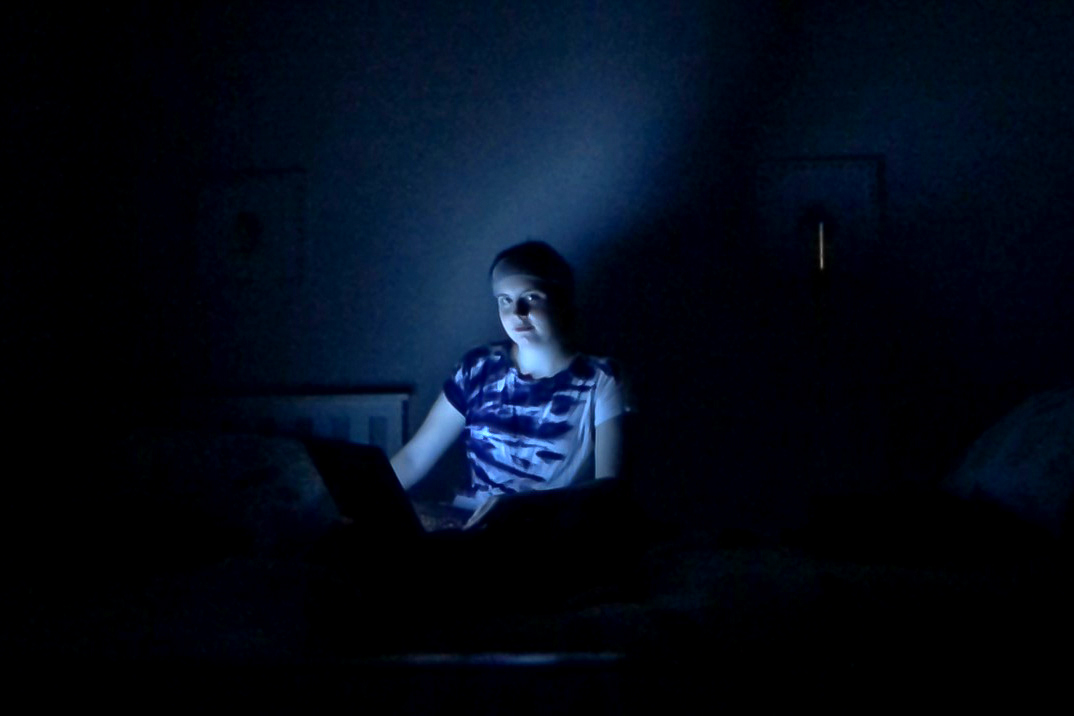
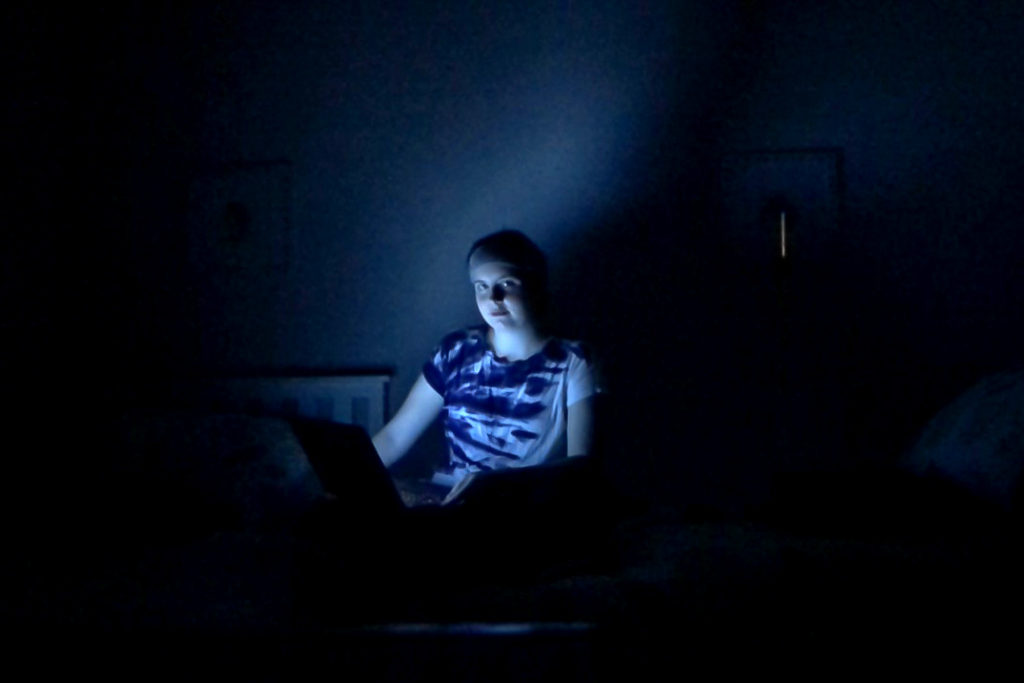
Aside from slouching in bed, staring at a screen every day as COVID-19 cases rise in 40 states has been one of the most draining experiences of my life. And it has been my reality for the past 116 days, ever since the Monday in March when my school shut its doors and shifted to online learning.
More widely, the pandemic has forced school children around the world to swap their classrooms for computers as spring semester courses, summer school and potentially even fall classes go digital.
As someone who’s been distance learning for what amounts to an entire summer break and then some, I can say that the monotony of waking up to a screen –– and not to your friends –– takes a toll.
Distance learning has altered routines in about every way possible, and considering many schools are engaging in a remote option for the fall semester, this will only get worse. I have reached a point where crucial things, like getting enough sleep and eating right, don’t come naturally to me anymore. Today, I woke up after four and a half hours of sleep. And I woke up at six, which means that I didn’t start sleeping until … this morning.
Basic routines — when altered – can have detrimental long-term impacts on health and well-being. While I enjoy the occasional 13 hours of sleep because of a 1 p.m. start to my Zoom school day, people have a tendency to become roped into these bad habits. And there’s seemingly no end in sight.
With this in mind, here’s an outline of how to acknowledge –– and act accordingly –– when your routines are becoming unhealthy. Hopefully I can offer some guidance in helping you ease the bad habits you have formed over the past 116 days and counting.
The factory model of schools — although an outdated concept in the 21st century — gave us order. We sat in our assembly-line rows, we followed a curriculum designed for us to perform well on standardized tests, we ate the same cafeteria lunch every day and we frantically ran from classroom to classroom to the shrill of a bell.
As much as we hated the monotony of it all and kept count of the days until our next break, school gave us a time and place to be. I never considered a world where in-person school would go out of fashion; it’s all I knew, all my parents knew and all I assumed my children would know.
But we’ve been hit with an unprecedented situation. Instead of being forced to stay in the school building for eight-hour days, we have the occasional Zoom meeting on a sunny afternoon, or sometimes even, no teacher-student or peer interaction whatsoever. This summer, I enrolled in two online programs for a total of 13 Zoom hours per day.
This kind of unstructured schedule — as opposed to everything we were used to — has threatened us in a way that goes beyond simple well-being. Soccer practice, theater rehearsal and procrastination, out; math homework, missing Zoom links and muted voices, in. We are on our own for the first time in our academic journey, and none of us recognizes or understands how to cope with the changes.
Forget Advanced Placement or International Baccalaureate classes for a minute. Taking courses at a college level is hard regardless of whether you’re online or not, but trying to absorb material over a screen is almost impossible, especially with the array of distractions we have at our leisure. I can watch Netflix, I can play games, I can cheat on a test. Not that I would, but the options are endless. There is no shrill bell.
Teenagers need eight to 10 hours of sleep each night to function best, and the lifestyle that comes with distance learning doesn’t do much to support that need. I know a great number of people that eat meals at unusual times of day — or sometimes eat snacks and call them meals. There is no better environment for eating disorders to thrive in than one filled with economic despair, fear over health and general dread.
Add onto this the fragmented structure of distance learning, and teenagers are at risk for a multitude of disorders.
Here are some tips that have helped me cope with the implications of distance learning, both mentally and physically.
Leave your house. If it’s safe, do so as often as you can. The combination of exercise and fresh air is a powerful tool that can really reset your mind after a long day of distance learning. Go to a local tennis court, go walking in your neighborhood, whatever makes you feel happy and gets you some vitamin D.
For those who feel uncomfortable going outside — which is understandable right now and for the foreseeable future — follow a workout video or run up and down the stairs.
Go to sleep early. Preferably, the day before you need to get up. As lame as it sounds, going to bed at 10 p.m. and waking up refreshed nine hours later feels so much better than staying up on TikTok or Netflix till the wee hours of the morning and waking up with a yawn.
Feed your head. Practice meditation or listen to relaxing soundscapes. Your ears and eyes deserve a break; don’t fall prey to Zoom fatigue.
Only connect. With your friends, because they are going through the same thing that you are. Not only is it helpful to hear their unique coping and self-care methods, but, it fosters a sense of connection with those who you were used to seeing everyday.
Finally, go crazy in the kitchen. No, seriously. With the time quarantine has given me, I have learned to cook so many fun recipes. And this really motivates me to eat healthy foods at normal times of the day.
With all this in mind, try to maintain a sense of routine. Trust me — feeling like you have things to do and places to be makes all the difference.

Related Posts