They’ve gone dark: Afghans who helped the U.S. military, trained as American-style journalists and rode the wave of women heading to higher education are destroying the diplomas, transcripts and résumés that prove how they built civil society in the country that the U.S. has left behind.
EDITORIAL: Hong Kong’s troublesome new law deserves a second look
By the NBTB 2020 Online Global Journalism Newsroom
This editorial reflects the unanimous view of the newsroom.
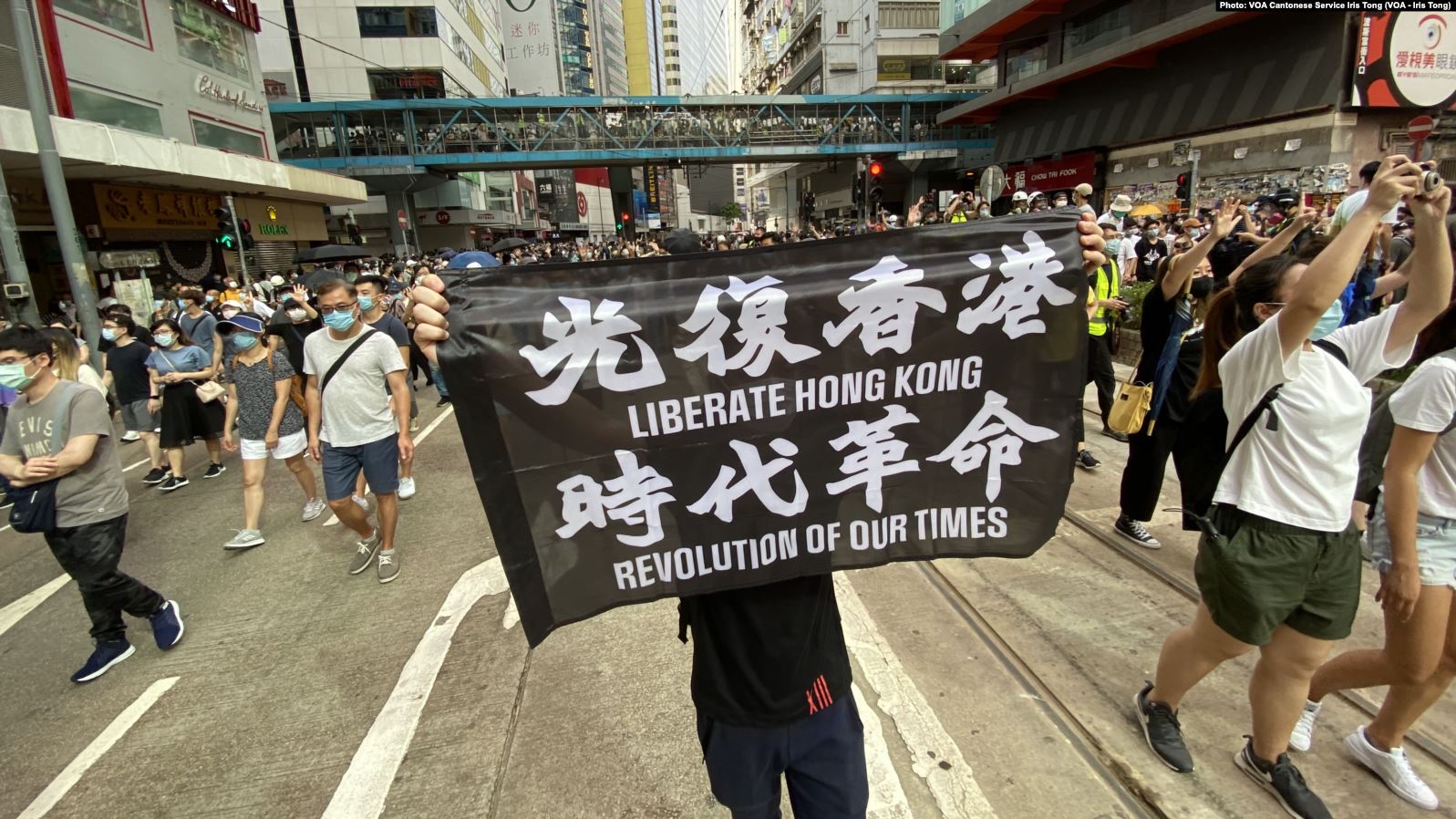
In Hong Kong, July 1 is typically a day to celebrate with government-approved peaceful protests, complete with fireworks. The day commemorates the establishment of Hong Kong’s Specially Administered Region status in 1997.
This year, however, thousands of Hong Kong citizens took to the streets to protest a new law that erodes Hong Kong’s autonomy.
And as a result of that law, for the first time, the protest was illegal.
Effective July 1, under the National Security Law, residents of Hong Kong can be charged with subversion, terrorism, secession and colluding with foreign forces if they promote hatred towards the Chinese government, disrupt transport, advocate for Hong Kong’s independence or spread pathogens (while not specified, presumably these could include COVID-19). The law is not only strongly worded but sweeping, with a total of 66 articles detailing punishable offenses, the corresponding sentences and the processes by which they are enforced. Depending on the offense, those who violate the law can face prison sentences from a minimum of 10 years to life.
Even more worrisome, under the law suspects can be sent to mainland China to be tried in closed trials with no jury. On top of that, decisions made by a national security committee are not “amenable to judicial review,” according to the law. The contents of the law were made private and not released to the general public until June 30, 2020, one day before it took effect.
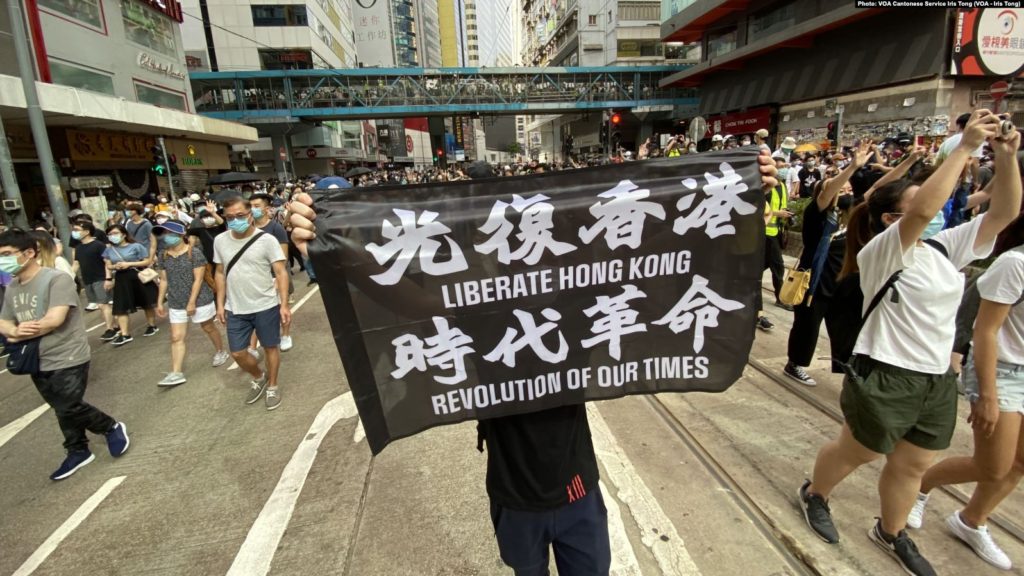
The next day, already scheduled July 1 protests had a new focus. Outrage quickly broke out all over Hong Kong; 10 of 370 protesters arrested on July 1 were detained under the new legislation. The remaining 360 protesters were detained on grounds of unlawful assembly, disorderly conduct, common assault and more. The Hong Kong Police Force posted about their first arrest surrounding the new law, a man carrying a flag donning the slogan “Hong Kong Independence,” on its Twitter page.
In response to the law, several pro-democracy groups have formally disbanded as a means to protect their members, while announcing that they would continue their operations overseas. A few groups have continued to actively participate in the new wave of protests by attending them, posting about them on social media and educating others on the core principles of the protests.
Although much of the legislation’s language focuses on violence, terrorism and national security, many people fear that its often over-broad language could be used to prosecute peaceful anti-government protesters.
@Hkz.global is an Instagram account backed by a panel of pro-democracy protesters whose ages range from 18 to 30 years old. The group includes seasoned protesters, some of whom have been involved in pro-democracy protests since 2012.
The group’s concerns are numerous; the legislation was passed by the People’s Congress of China, meaning that the law completely bypassed Hong Kong’s Legislative Council. According to Hkz.global, this action sets a dangerous precedent for future laws, demonstrating how Hong Kong is gradually losing its autonomy. This autonomy is promised in the Sino-British Joint Declaration of 1997 and recognized by the United Nations. Hkz.global asserts that despite the recognition of the declaration, “China claims it is outdated and only quotes it when it is favorable to them.”
Furthermore, opponents believe that the language of the law — in defining what constitutes offenses such as terrorism, secession and more — is too brief and open to manipulation. Hkz.global said that the “ambiguity of the law is a major concern, as we do not know in the future what acts can be classified as ‘collusion with foreign forces,’ ‘separatist ideas’ or ‘subversion’.” The law is written to be applicable worldwide, meaning that this also impacts the views of foreigners in China’s eyes.
At stake is not only what happens now but tomorrow. A protester who is the media president of a private organization that supports freedom of speech in Hong Kong said that he believes the law is susceptible to abuse and that it potentially could “control (the Hong Kong) people’s voice.” @Hkz.global has urged protesters to fight the law in myriad ways, through constructing blank Lennon walls, participating in silent protests, sharing their thoughts on social media and spreading awareness.
Although many staunchly oppose the newest legislation, pro-China Hong Kongers, including some working in Hong Kong’s government, believe that it’s a standard that could help curb troublesome protests.
In fact, more than 50 countries voiced their support for the new law at the 44th session of the United Nations Human Rights Council, while 27 countries voiced criticism against the legislation. In Taiwan and Australia there are also national security laws (and national debates about them) aimed at protecting citizens. But given different judicial procedures, the scope of these laws remains more limited than the one imposed in Hong Kong.
To be sure, this law would not be the first in the canon of over-broad, poorly written laws that seek to balance public safety and public speech. For example, laws like the Alien and Sedition Acts of 1798 and the 1918 Sedition Act in the United States granted the government wide-ranging power to prosecute political enemies and dissenters. Not even the world’s liberal democracies are immune from attempts to silence free speech.
We think it is important for people to recognize that the developments in Hong Kong are not an isolated issue, but a continuation of the pattern of authoritarianism that has reared its head in almost every region on earth. In doing so, we believe it is important for people everywhere to listen to the calls of Hong Kongers and work to, as stated by @Hkz.global, “preserve (Hong Kong’s) culture, and to continue the fight from abroad.”
We would also remind those who value free speech that it’s possible to provide support through a screen. As young people, the most powerful platform we have to share our voices is social media. In the Black Lives Matter Movement in the United States, people shared resources, stories and donation links online. The same could be done for Hong Kong.
It’s unlikely that the legislation could be repealed, but there’s still time to ensure that Hong Kong’s story doesn’t go unheard.

Related Posts