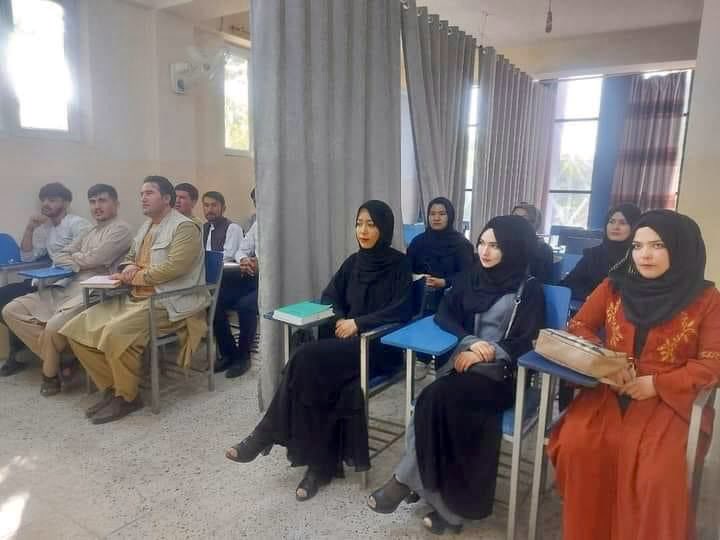
They’ve gone dark: Afghans who helped the U.S. military, trained as American-style journalists and rode the wave of women heading to higher education are destroying the diplomas, transcripts and résumés that prove how they built civil society in the country that the U.S. has left behind.
@dear Instagram accounts prompt painful discussions, public disclosures about elite private schools
By Grace Sandman, Newsroom By the Bay
Editor’s note: This story mentions racism, anti-Semitism and sexual harassment involving high school students, which may be distressing for some readers.
PASADENA, California — The handles — typically, “@dear” or “@blackat” and then the name of a school — are deceptively benign. But the results have been devastating.
Weeks after the Black Lives Matter protests over the death of George Floyd on May 25 in Minneapolis, a series of Instagram accounts created by high school students at elite preparatory schools in the Los Angeles area are illuminating allegations of systemic racism at institutions that pride themselves as championing diversity, equity and inclusion.
“Harvard-Westlake has fostered bigotry for the entirety of (its) existence. Students of color have always known this; however, for far too long, our white peers have been unaware. We’ve been silent and silenced too long,” a post read on @blackathw, an Instagram account that references Harvard-Westlake School in Los Angeles.
Students and alumni from predominantly white prep schools created Instagram pages offering a platform for Black, Indigenous and people of color (“BIPOC”) to share and expose their experiences with racism at their institutions. Accounts of those experiences were sent via Instagram direct messages, emails, and Google Forms to the Instagram account administrators, who posted them, without using the author’s names.
More than 10 such accounts have surfaced since June, targeting schools such as the Polytechnic School in Pasadena, California, the Marlborough School in Los Angeles and Oakwood School in North Hollywood, California, in addition to Harvard-Westlake.
The Instagram accounts make for difficult reading, with posts alleging racism, anti-Semitism and even sexual assault. Many students and alumni assert that these incidents have already been reported to school officials, who refused to take appropriate action. Some allege that schools refuse to investigate or follow up on claims involving white children of wealthy donors.
According to Niche, a school ranking website popular with Los Angeles students, Harvard-Westlake is the “#1 Best Private High School” in Los Angeles and the #2 “in best private schools in California;” Niche’s description refers to its “diverse and inclusive community.”
Polytechnic School, ranked #3 among private schools in the Los Angeles area, says on its website’s “Diversity, Equity, and Inclusion” page that it “value(s) the uniqueness of each individual in the community to fulfill the school’s mission and vision … An inclusive community fosters academic excellence and personal growth to ensure that all students are seen and heard, empowering every student to be authentic.”
Marlborough School, with a Niche ranking of #1 among private all-girls’ schools in Los Angeles, proudly states in its profile that the students are “encouraged and empowered to use their strong voices and leadership abilities to make a lasting difference in the world we all share.”
But in their Instagram posts, some students, faculty and alumni of these schools paint a far different picture, with reports of white students casually using the N-word, repeatedly touching and disparaging the hair of Black students even after being asked to stop, and asserting that Black students are accepted to top colleges and high schools only because they are Black.
Further, some posts allege that private school teachers and administrators seek to feature BIPOC students and teachers on public panels and in-school marketing materials while failing to hire BIPOC faculty and educational staff.
Memories of hurt at Harvard-Westlake
The account @blackathw asked users to write what they knew about being Black at Harvard-Westlake. Alumni from the class of 2019 and students solicited the stories with a Google Form link in an Instagram bio.
The form reads, “(f)or one, we want to highlight just how pervasive racism is on our campus, despite our living in a ‘liberal bubble’. For another, we hope that reading one another’s stories can help you know that you’re not alone,” wrote @blackathw.
The posts reveal memories of hurt that go back years.
The following post appeared on the @blackathw account. The identities of the account holder and/or the writer could not be verified.
A current student had a similar memory. “When I was in 8th grade, this kid walked up to me in English class and asked me for the N-word pass. His friend behind him started snickering. Later on in the year, another kid said to me that the only reason I got into (Harvard-Westlake) was because I was Black,” rising junior Idalis McZeal said in an interview with this reporter.
In a letter addressed to Head of School Richard B. Commons and published June 3 in the school’s student-run newspaper, The Chronicle, two members of Harvard-Westlake’s class of 2007 wrote about their alma mater.
“Harvard-Westlake has historically been a predominantly white institution. While we were students there, this fact was rarely, if ever, discussed. We were not encouraged to examine or question our own role in supporting structural racism or the ways in which the majority of the student body benefited from it,” says the letter, signed by alumnae Sophie Mancall-Bitel and Nikila Sri-Kumar.
In another letter also published on June 3, two alumnae of the class of 2002 went further. “We also are these Black people. We are the Wolverines who both experienced Harvard-Westlake as a safe space and also one that allowed for constant micro and macro aggressions. We studied a world history curriculum with no mention of African history. We participated in CIF (California Interscholastic Federation) championships only to be ridiculed for being on athletic scholarships or called the N-word in the locker room. We would’ve been suspended for infractions that we did not commit were it not for Black faculty and staff investigating the truth of the matter. And we remain in this duality, in a country that kills us one day and expects us to come to work and school the next,” wrote alums Keren Johnson and Anita Schmidt.
No reply was received from Harvard-Westlake’s Head of School Richard B. Commons or Janine Hancock Jones, director of Diversity, Equity, and Inclusion, in response to emails sent July 2 to Commons and Jones requesting comment on the @blackathw Instagram account. The emails were sent to each person via a message board on the school website and to their school email addresses.
On July 17, Commons sent out an email to the Harvard-Westlake community addressing @blackathw and the school’s plan for addressing systemic racism within the school. The Chronicle published the email the day afterwards.
“In discussions with students, alumni, parents, faculty, and staff, the school leadership team has heard stories of inexcusable experiences of bias, microaggression, and outright racism, and we have read similar accounts and emails, letters, and social media postings from people of color in our community. The stores have pained us and galvanized us,” Commons wrote.
“These are challenging times, but Harvard-Westlake will face them with humility, determination, and commitment to one another,” Commons added.
Harvard-Westlake plans to share the school’s initial plans for making anti-racism an active part of its culture and community this Friday.
@dear_poly posts allege casual remarks with lasting impact
As of July 21, 2020, @dear_poly had more than 1,700 followers, more than any other of the other Instagram accounts about private schools in Pasadena, California. Along with allegations of racism targeting Black students, the Instagram posts at the Polytechnic School allege anti-Semitism as well as incidents involving anti-Asian and anti-Latinx behavior.
In addition to citing specific incidents, the posts also refer to offhand remarks so offensive that they constituted lasting microaggressions.
For example, one post recounts the response to a Poly student who expressed concern for her friends and family due to the spread of COVID-19 in New York’s Jewish community. According to the post, that prompted a teacher and students to remark that “maybe it’s the plague coming back for them,” a reference to the Black Death that killed millions in Europe and China during the 14th century and for which Jews were persecuted, or “divine justice for killing all the Egyptian babies,” a misreading of the story of Passover. “The ease at which they were all joking around about Jewish death terrified me,” the student posted.
The identities of the persons to which the post refers and the comments they allegedly made could not be verified.
In addition to allegations of anti-Semitism, posts also reflect allegations of racism.
The following post appeared on the @dear_poly account but the identities of the account holder and/or the writers could not be verified.
On July 7, Polytechnic Head of School John Bracker took to Twitter to post a letter that acknowledged how students and alumni of color from independent schools nationwide are using social media to share their experiences of racism and marginalization.
“We at Poly have read painful accounts of bigotry and institutionalized racism that have created deep wounds for members of the Polytechnic family,” read the letter.
Bracker also referred to a previous letter released June 18 that explained Poly’s plan to design and implement anti-racist strategies and programming.
In response to @dear_poly and the BIPOC community, Polytechnic plans to have its entire faculty and staff participate in professional development training to address racism, implicit bias and microaggressions — verbal or nonverbal slights, snubs and insults that target or offend others — during the past three years. The school has also formed an Equity and Inclusion Committee consisting of administrators, faculty, staff, and trustees to develop a leadership and school priorities plan.
Standing behind @dear_marlborough
Unlike others who posted to @dear Instagram accounts, Adriana Kyncl, ‘20, was willing to verify in a follow-up interview that she submitted material to the @dear_marlborough account, including the post below:
In another post, Kyncl reached out directly to Marlborough faculty and staff, saying that if a student “says something or acts in a racist/discriminatory manner, you have to separate that student from how much money their parents make and how much the family donates to the school.”
“How will you help (a student of color) move forward, and how will you ensure they will not feel like a target is on their back on campus,” she asked.
Tuition at Marlborough for the 2019-20 school year was $42,900. According to the school website, one in five students receives financial assistance; the average financial aid award in 2019-2020 was $30,000.
Despite criticism, Marlborough has reacted out to the @dear_marlborough Instagram account with support, not disapproval. In fact, administrators have praised the account and even posted their own stories and opinions.
“Many members of the faculty have reached out to voice their support of our account. Our school principal also sent an all-school email addressing the account saying although the school is not in charge of the account they stand behind it,” wrote the @dear_marlborough account owner.
When asked what Marlborough intends to do to address the racism brought to light in the Instagram posts to make the school a more welcoming and safe environment for BIPOC students, Jenn Wells, Marlborough’s director of equity and inclusion, emailed the school’s response.
‘We acknowledge the harm our actions — and in some cases, interactions — have had on our students and employees of color, especially our Black community members, and we commit to doing better,” Wells wrote. “This summer we are making important changes to our History and English curricula to ensure we are teaching honestly, accurately, and equitably placing all students’ voices at the heart of our work.”
Marlborough plans to host its first-ever online summer course for faculty and staff with a focus on equitable education and anti-racism in the classroom. The school also will examine its code of conduct through the lens of equity, from reporting incidents to encouraging restorative justice approaches for students on issues that involve race, ethnicity, and gender identities.
@thewaverlyway — Instagram responses are “gratifying and heartbreaking”
Hoping to prod their schools into responding to what they say are incidents of racism and misconduct, and inspired by @dear_poly, a student at The Waverly School in Pasadena created @thewaverlyway.
“I am a rising senior. I decided to create this account because I felt as if me, along with my fellow BIPOC classmates, were never given a space to air out our frustrations about the racism we face on a daily basis on and off campus,” the student wrote in a direct message to this reporter on June 29.
“I have multiple faculty members following the account,” the student noted. “I only started this account 2 days ago … and it has by far been the most gratifying and heartbreaking experience of my life.”
Like other account holders, the student refused to be identified by name.
Although many students and alumni who post to @dear_marlborough remain anonymous, on June 28 a Waverly alumna commented on a post, claiming it to be her own and alleging that a Waverly employee had made repeated sexual advances towards her while she was still a student at the school.
Asked for Waverly’s response to “posts surrounding students feeling sexually unsafe in the Waverly community,” Meg Bradbury, assistant to Heidi Johnson, Waverly’s head of school, forwarded a July 2 letter sent by Johnson “to the Waverly community.”
While Johnson’s letter does not address allegations of sexual harassment, it reads in part: “There is one specific post that is being urgently addressed due to the nature of the allegation. We are taking this matter very seriously and are actively working to resolve it.”
The following posts appeared on the @thewaverlyway account but the identities of the account holder and/or the writers could not be verified.
Johnson’s letter addressed other posts that have caused concern to the school.
“The stories that have been shared by current students and alumni who are BIPOC on the @thewaverlyway Instagram account make clear that students have experienced harmful acts of racism in our community,” Johnson wrote. “The students and alumni who have posted and commented on the account have demonstrated tremendous courage. We are inspired by their actions and support them in their efforts to push the Waverly community to live up to our stated ideals.”
At Oakwood School, alums call for specific changes
While many schools mentioned above are issuing statements about their plans moving forward to address racism, students, alumni and alumnae at another Los Angeles school delivered a list of specific demands.
@blackatoakwood created a list of demands for administrators and members of the board of trustees at Oakwood School.
The account was started by Sikkiim Hamilton, who graduated from Oakwood in 2019. Soon after Hamilton began the account, a few other Black graduates and current students joined. The following post was verified as written by Hamilton:
“I initially created the account because I had met with the admin of Oakwood to voice my concerns about a virtual town meeting they had. In this town meeting, they spoke about the anti-Black racism and the recent murder of George Floyd. However, there were no Black faculty or students speaking on the issue. I voiced my concerns to the school in a meeting and was told I would get a follow-up,” messaged Hamilton to this reporter.
Hamilton later reached out to members of her graduating class for a conversation about white accountability for acts that offend others.
“To my dismay, not many students showed up (to the meeting), and I didn’t think that students were aware of how deep anti-Black racism runs at Oakwood,” Hamilton wrote. “The next morning, I started the page, and within two days we created a functioning team.”
Hamilton and other 2019 graduates then created a formal list of demands which they delivered to administrators and the board of trustees on June 25. The list, which was shared with this reporter, covers subjects such as accountability, curriculum, campus resources and solutions.
The proposed solutions include hiring a Title IX faculty member to support students of color, imposing consequences for teachers, faculty, and staff who do not follow the protocols regarding racial discrimination and no longer using students of color to market the school. The former students also suggest a new elementary school curriculum to educate students about racism from the start, equal access to college counseling and reconstructing the school’s Diversity Week to be more effective.
“I hope that Oakwood is able to take accountability for fostering an anti-Black campus for years, and in the future grow to make this community one that loves and embraces its Black students,” wrote Hamilton.
Other posts reflect a similar urgency. The following post appeared on the @blackatoakwood account but the identity of the writer could not be verified.
Demands aside, Oakwood has taken matters into its own hands. According to Bret Nicely, Oakwood’s director of communications, the school began posting responses to @blackatoakwood shortly after it went live.
“Oakwood has taken steps behind the scenes in response, listening to and having conversations with Black families at our school,” Nicely wrote. He also forwarded a letter that Head of School Jaime Dominguez sent to students, families, and alumni, highlighting the actions Oakwood is taking to be more equitable and inclusive.
It is clear that all of the schools facing @dear Instagram testimonies are in response mode, many scrambling to put in place formal reporting systems, student and alumni affinity groups, reconciliation sessions and new anti-racism and anti-bias education programs as the next school year rapidly approaches. School closures due to COVID-19 may give the schools additional time to work on implementing the new promises before students return to campuses.
“We hear you, we see you,” is a common refrain by school officials in the aftermath of these Instagram posts. But only time will tell if the social media accounts will be enough to finally motivate the schools to eradicate the racism that students say is just beneath a polished surface at Los Angeles elite private schools.
“It is clear from the painful and powerful stories of our community members that now is not only a time for deep listening, but also meaningful action and measurable change,” wrote Marlborough’s Jenn Wells.
Editor’s note: Thanks to Mike Hiestand, senior legal counsel at the Student Press Law Center in Washington, D.C., for assistance on this story.
CORRECTION: The correct pronouns for Sikkiim Hamilton are she/her/hers, not he/him/his. Also, the @blackatoakwood logo was incorrectly described as a raised fist superimposed on four power buttons; the fist is superimposed on the logo of Oakwood School. We regret the errors.

Related Posts